 Quanzhou Ausenist Technology Co., Ltd
 What VFD Models Should a Water Pump Distributor Keep in Stock?
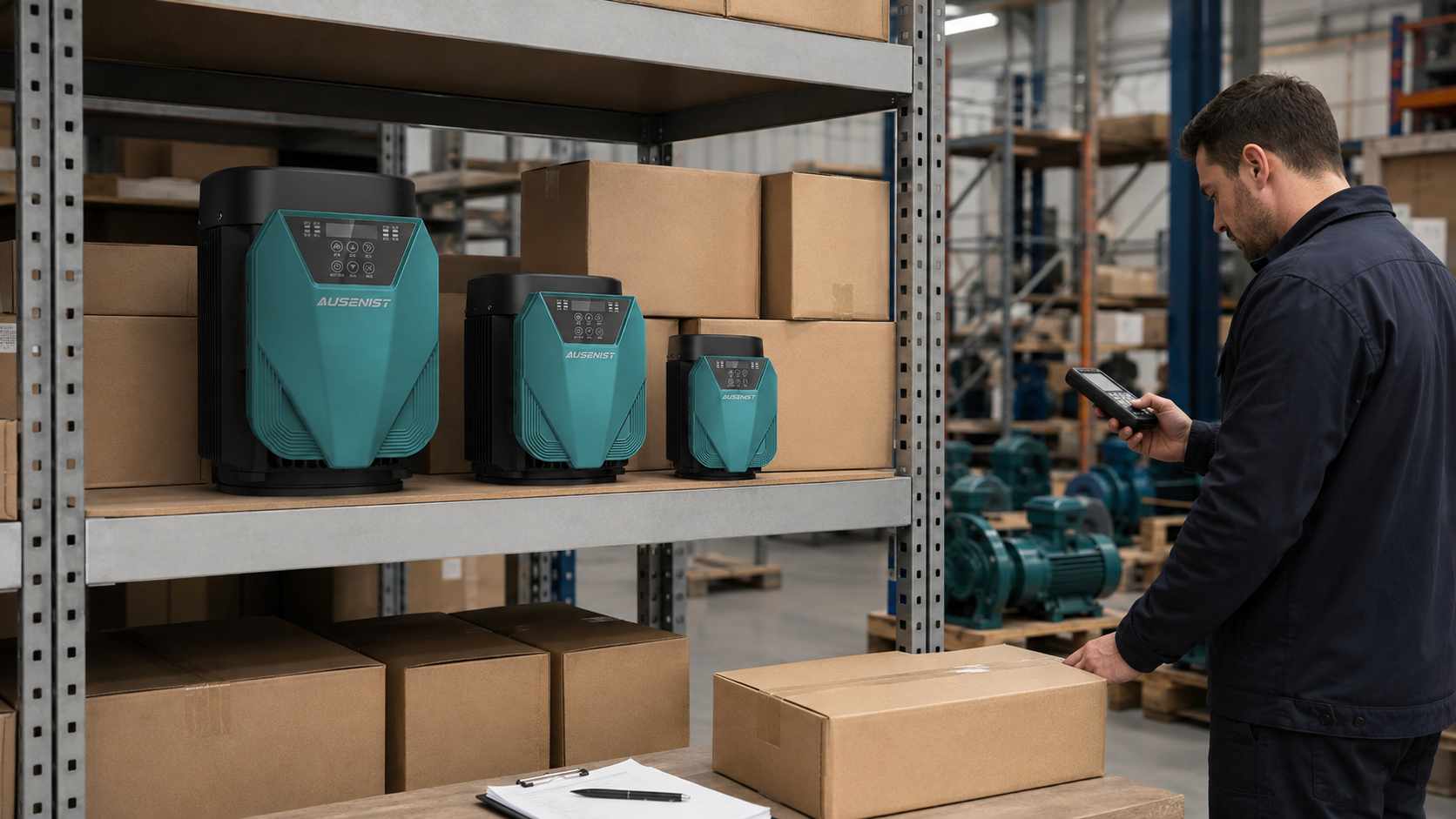
A water pump distributor should stock VFDs that cover its most frequently sold motor currents, local supply conditions and repeatable pump applications. It is usually better to begin with a narrow core range and keep unusual voltages, motor types or control requirements as confirmed special orders.
There is no universal starter stock list. A list based only on popular kW ratings can leave the distributor with drives that do not match local input power or the actual current of its pump motors.
What Information Is Required?
Prepare a sales table containing:
pump motor rated power, voltage, current, frequency and motor type;
local supply voltage, phase and normal variation;
sales quantity by motor rating for the last 6–12 months, if available;
main applications and whether constant-pressure control is required;
common sensor, communication, mounting and enclosure needs;
acceptable replenishment time and the quantity the business can support;
local commissioning skills and expected after-sales workload.
Separate frequent, occasional and project-only demand. This makes it easier to distinguish core stock from products that should be ordered against a confirmed customer specification.
Selection Example
Suppose a distributor sells most of its pumps in three groups: 1.5 kW and 2.2 kW motors for small booster systems, and 4 kW motors for larger installations. Most use a 380/400 V three-phase supply, while occasional customers request 220/230 V solutions.
The distributor should first map the actual nameplate current of the high-volume motors to compatible VFD current ratings. It can then hold a controlled quantity of the confirmed three-phase variants, plus a sample or limited quantity for the proven 220/230 V demand. Special motor types, voltage conversion requests and uncommon control options should remain quotation items until their volume is demonstrated.
Common Mistakes
Copying another country's stock list without checking the local electrical supply.
Grouping pumps by kW while ignoring rated current and motor type.
Mixing input-voltage and output-voltage requirements in one stock code.
Buying every available option before proving local demand.
Holding hardware without the matching parameter records, sensor information and sales guidance.
AUSENIST Solution
AUSENIST can convert a distributor's pump sales table into a proposed starter range for YS620 and YS820, subject to confirmation of each motor and application. The output can distinguish core stock, low-volume stock, samples and project-only configurations, with basic parameter guidance for repeatable pump applications.
The recommendation cannot be reliable when sales data are only total units with no voltage or motor-current breakdown. Final inventory quantities also depend on the distributor's cash flow, replenishment plan and service capacity; AUSENIST should not prescribe those commercial limits without the distributor's input. For the wider supplier review, see how pump distributors should choose a VFD supplier.
Tell us your main pump power range and local voltage. We can recommend a starter stock list and distributor pricing.