 Quanzhou Ausenist Technology Co., Ltd
 How to Size a Pump VFD Project for Irrigation Zones with Different Flow Demand
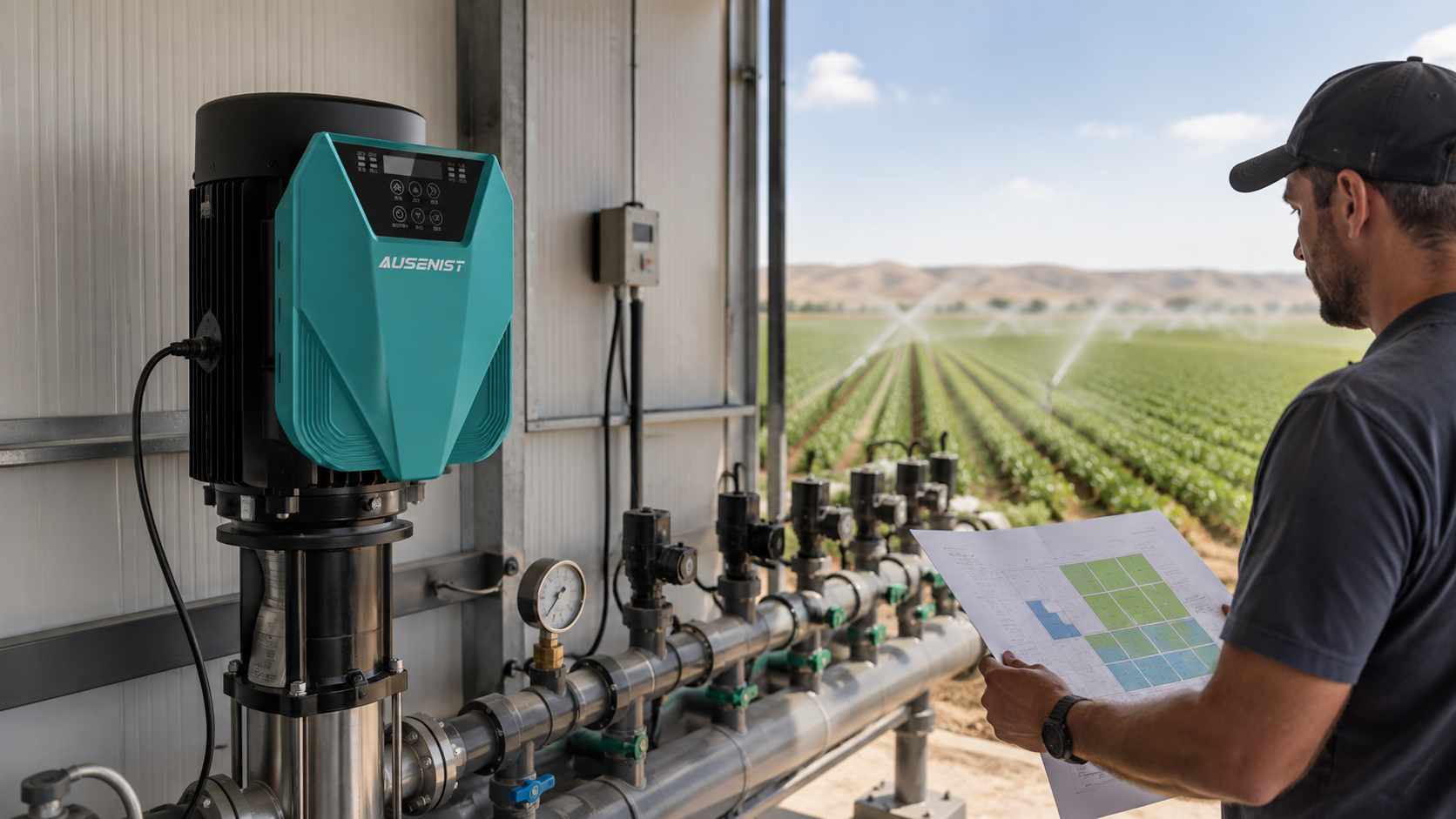
For an irrigation system with several zones, select the VFD from motor rated current and confirm that the pump can operate safely across the lowest and highest expected zone demand. The control target may be pressure, flow or a scheduled speed, depending on the hydraulic design.
A VFD saves the installer from using one fixed speed for every zone, but it does not guarantee that a single pump is suitable for all valve combinations.
What Information Is Required?
- Pump and motor nameplate data, pump curve and allowable operating range.
- Site supply voltage, phase, frequency and generator information if applicable.
- Required flow and pressure for each irrigation zone.
- Which zones may operate at the same time.
- Valve sequence, pressure-sensor location and feedback signal.
- Water source level, filtration condition and dry-run detection method.
- Cable length, outdoor enclosure conditions and remote-control requirements.
Selection Example
An irrigation pump serves three zones requiring 25, 45 and 60 m³/h at different pressures. The motor is 11 kW, 380 V, and its rated current is available. The integrator should plot the permitted zone combinations against the pump curve, then decide whether constant pressure or scheduled setpoints are appropriate.
The VFD must be rated for the motor current after environmental factors are considered. Minimum speed, valve timing and ramp settings should be verified during commissioning so the pump avoids unstable low-flow operation and pressure surges.
Common Mistakes
- Selecting from the largest zone flow without checking the smallest zone.
- Placing the pressure sensor where valve losses distort system feedback.
- Allowing valves to close before the pump decelerates.
- Ignoring generator capacity, voltage variation or outdoor temperature.
- Treating dry-run protection as a substitute for correct water-source design.
AUSENIST Solution
AUSENIST can review the motor data, zone table, sensor plan and control sequence, then recommend a YS620 or YS820 direction for engineering confirmation. Basic support may include current-based selection, feedback planning, ramp and sleep/wake parameter guidance and required external signals.
Projects with changing water levels, very different zone duties, long cables or remote automation need individual review. If the pump curve does not cover the required operating envelope, changing the VFD cannot solve that hydraulic mismatch.
Send us the motor nameplate, quantity, voltage, application and project requirements. We can prepare VFD selection and quotation.