 Quanzhou Ausenist Technology Co., Ltd
 SEO Title
15kW 380V VFD for a Booster Pump System in Peru
Meta Description
A 15kW 380V booster pump VFD selection case for Peru, covering constant-pressure PID control, pressure sensor feedback, motor current checks and setup notes.
Suggested URL Slug
/15kw-380v-booster-pump-vfd-peru/
15kW 380V VFD for a Booster Pump System in Peru
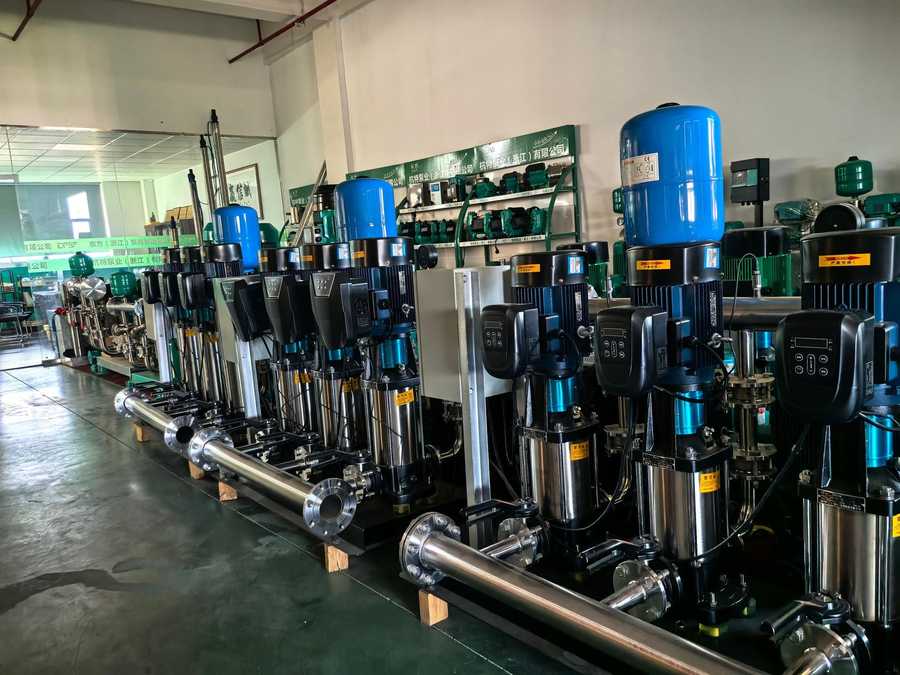
Real AUSENIST pump configuration photo used for technical reference; it is not presented as the customer site photo.
Introduction
A pump distributor in Peru needed a VFD solution for a 15kW booster pump used in a building water supply system. The main requirement was not only to start the motor, but to maintain stable outlet pressure as water demand changed during the day.
Based on the project information available for this draft, AUSENIST recommended a 380V pump inverter configuration using PID pressure control and analog pressure feedback. Because the motor rated current was not provided, the final model must still be confirmed against the actual motor nameplate before ordering.
Project Overview
| Item | Project Requirement |
|---|---|
| Country | Peru |
| Customer Type | Pump distributor |
| Application | Building booster water supply |
| Pump Type | Booster pump |
| Motor Power | 15kW |
| Motor Voltage | 380V three-phase |
| Power Supply | 380V three-phase |
| Control Requirement | Constant pressure |
| Pressure Sensor | Analog pressure transmitter recommended |
| VFD Model | AUSENIST 380V pump VFD, 15kW class, subject to current confirmation |
| Control Method | PID pressure control |
Customer Requirement
The customer needed a 380V pump VFD for a booster system where water demand would vary between low-use and peak-use periods. A direct-on-line starter or simple soft starter could reduce some starting stress, but it could not regulate pressure by changing motor speed.
The practical requirement was a constant pressure VFD that could receive pressure feedback, compare it with a target value and adjust pump speed automatically. The distributor also needed a selection basis that could be explained to its local installation team.
Technical Challenge
This project cannot be selected from motor power alone. A 15kW motor may have different rated current depending on efficiency class, service factor, voltage tolerance and motor design. The VFD output current must match the actual motor nameplate, not only the kW rating.
The hydraulic load also matters. Booster pumps can start under pressure, operate for long periods and respond to fast demand changes. If the PID response is too aggressive, pressure may oscillate. If the minimum frequency is set too low, the pump may run without useful pressure or cooling.
VFD Selection
Based on the information provided by the customer, the required direction is a 15kW 380V pump VFD with PID control. The input and output voltage should match the available three-phase 380V supply and the 380V three-phase motor.
Before final confirmation, AUSENIST should check:
- Motor rated current on the nameplate.
- Pump type and operating pressure range.
- Pressure transmitter signal and pressure range.
- Whether the system is single-pump or part of a multi-pump panel.
- Installation temperature, cabinet ventilation and cable length.
If the motor current is close to the VFD limit, or if the site has poor ventilation or unusually heavy starting conditions, the selection may require engineering review or a higher-rated configuration.
Recommended Solution
| Item | Recommended Configuration |
|---|---|
| VFD Model | AUSENIST 380V pump VFD, 15kW class |
| Rated Power | 15kW, subject to motor current confirmation |
| Input | 380V three-phase |
| Output | 380V three-phase |
| Control Mode | PID constant-pressure control |
| Pressure Feedback | Analog pressure transmitter |
| Optional Accessories | Pressure sensor, input reactor or output reactor if required by site conditions |
The pressure transmitter should be installed at a representative point on the outlet pipeline. The VFD reads the feedback signal, compares it with the target pressure and adjusts motor speed. When demand increases, the drive raises frequency. When demand falls, the drive reduces frequency and may enter sleep logic if the application is configured for it.
System Operating Logic
Pressure transmitter
↓
Analog feedback to VFD
↓
PID comparison with target pressure
↓
Motor speed adjustment
↓
Stable booster system pressure
Recommended Initial Parameters
| Parameter | Recommended Setting |
|---|---|
| Motor Rated Power | Set according to the 15kW motor nameplate |
| Motor Rated Voltage | 380V |
| Motor Rated Current | Set according to the actual nameplate |
| Maximum Frequency | According to motor and pump rating |
| Minimum Frequency | Confirm according to pump curve and cooling requirement |
| Acceleration Time | Set to reduce water hammer and starting shock |
| Deceleration Time | Set to avoid pressure shock and overvoltage trips |
| PID Target | Set according to required system pressure |
| Pressure Feedback | Match transmitter signal and range |
Final settings should be adjusted according to the actual motor nameplate, pump curve and site conditions.
Expected Operating Behavior
The VFD is expected to automatically adjust booster pump speed according to pressure demand and reduce unnecessary full-speed operation. During commissioning, the installer should verify pressure stability, motor current, sensor scaling and sleep/wake behavior before handing over the system.
No energy-saving percentage or running result is stated here because no verified operating data was provided for this draft.
Engineering Notes
- Check motor rated current, not only 15kW motor power.
- Select the pressure transmitter range according to the real system pressure.
- Keep sensor wiring away from high-power motor cables where possible.
- Review output cable length; long cables may require an output reactor.
- Tune PID settings on site to avoid pressure hunting.
FAQ
Can a 15kW pump use a 15kW VFD?
Usually yes if the VFD output current is suitable for the motor rated current and the application duty. The nameplate current must be checked before final selection.
What pressure sensor can be used with a booster pump VFD?
An analog pressure transmitter is normally used for PID pressure control. The signal type and pressure range must match the VFD input and the pipeline pressure range.
Is a VFD better than a soft starter for constant pressure?
For constant-pressure booster control, a VFD is normally required because it changes motor speed. A soft starter mainly helps with starting and stopping.
Does the VFD need an output reactor?
It depends on cable length, motor insulation, installation layout and site electrical conditions. Long motor cables should be reviewed before ordering.
Have a Similar Pump Application?
If you are selecting a VFD for a centrifugal pump, booster pump, irrigation pump or constant-pressure water system, send us:
- Motor nameplate
- Pump type
- Motor power
- Rated voltage and current
- Power supply
- Required pressure
- Application conditions
AUSENIST can recommend the appropriate VFD model and control configuration.
Target Keywords:
15kW VFD for water pump, 380V booster pump VFD, constant pressure pump VFD, pump inverter Peru, PID water pump control, booster pump VFD, water pump VFD
Character Count:
Approximately 8,300 characters.